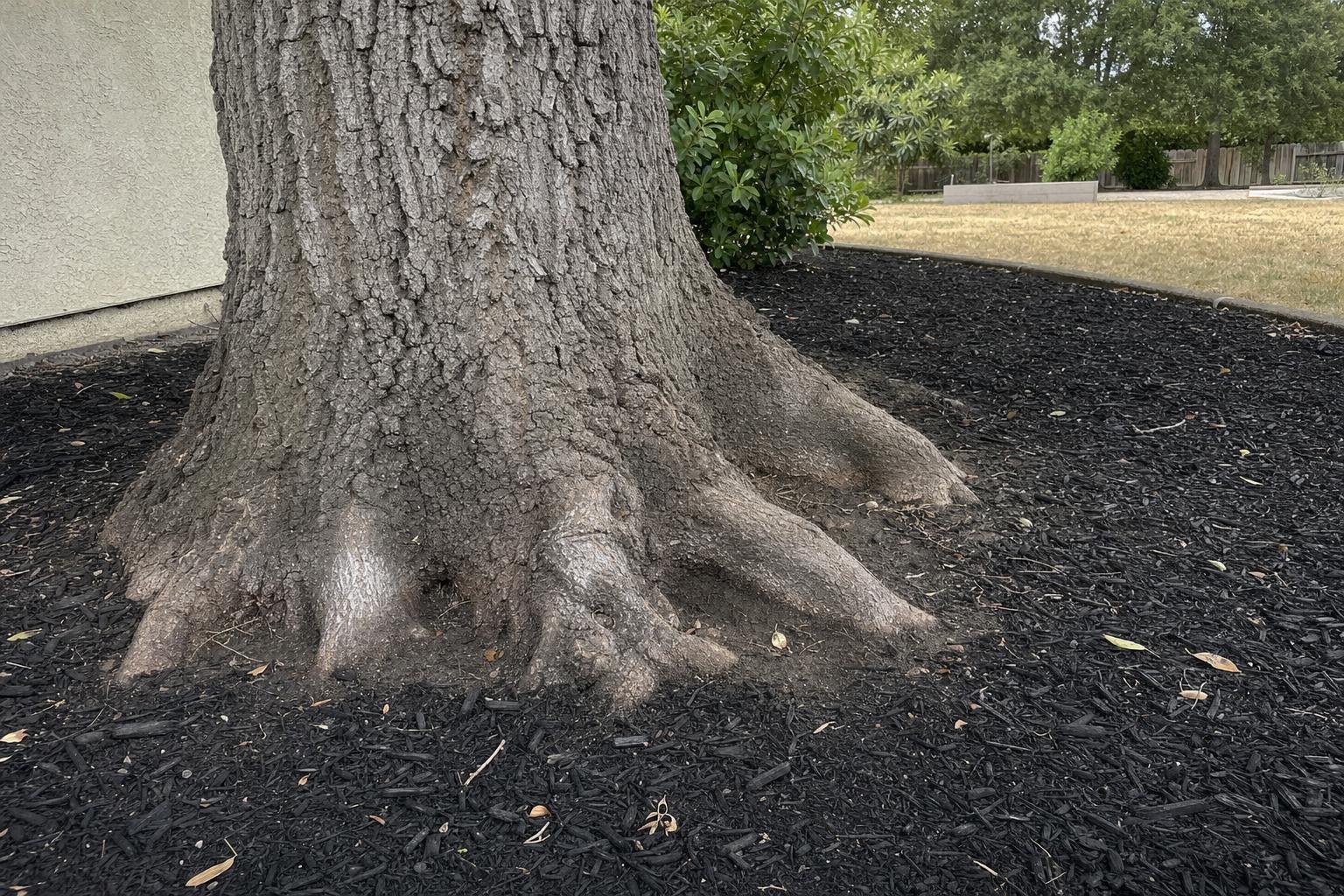
We do it when a tree is growing poorly, the canopy is thinning, or roots are visibly wrapping the base. If a root is girdling the trunk, we cut it out.
When to dig down
Call us if a tree is stunted or thinning for no clear reason, or if you can see surface roots curling around the trunk instead of running away from it. Both can mean a root is squeezing the tree below the soil line. Digging down is how we find out. Guessing from the surface doesn't tell us much.
If the tree looks fine and the roots flow outward from the base, you don't need this work.
See also a tree health inspection. Ready to hire for tree service in Visalia? Start with our home page.
Worth a read: Tree Service Step by Step: What the Job Involves · How to Choose a Tree Service Contractor: What a Good Quote Spells Out
How we expose the roots
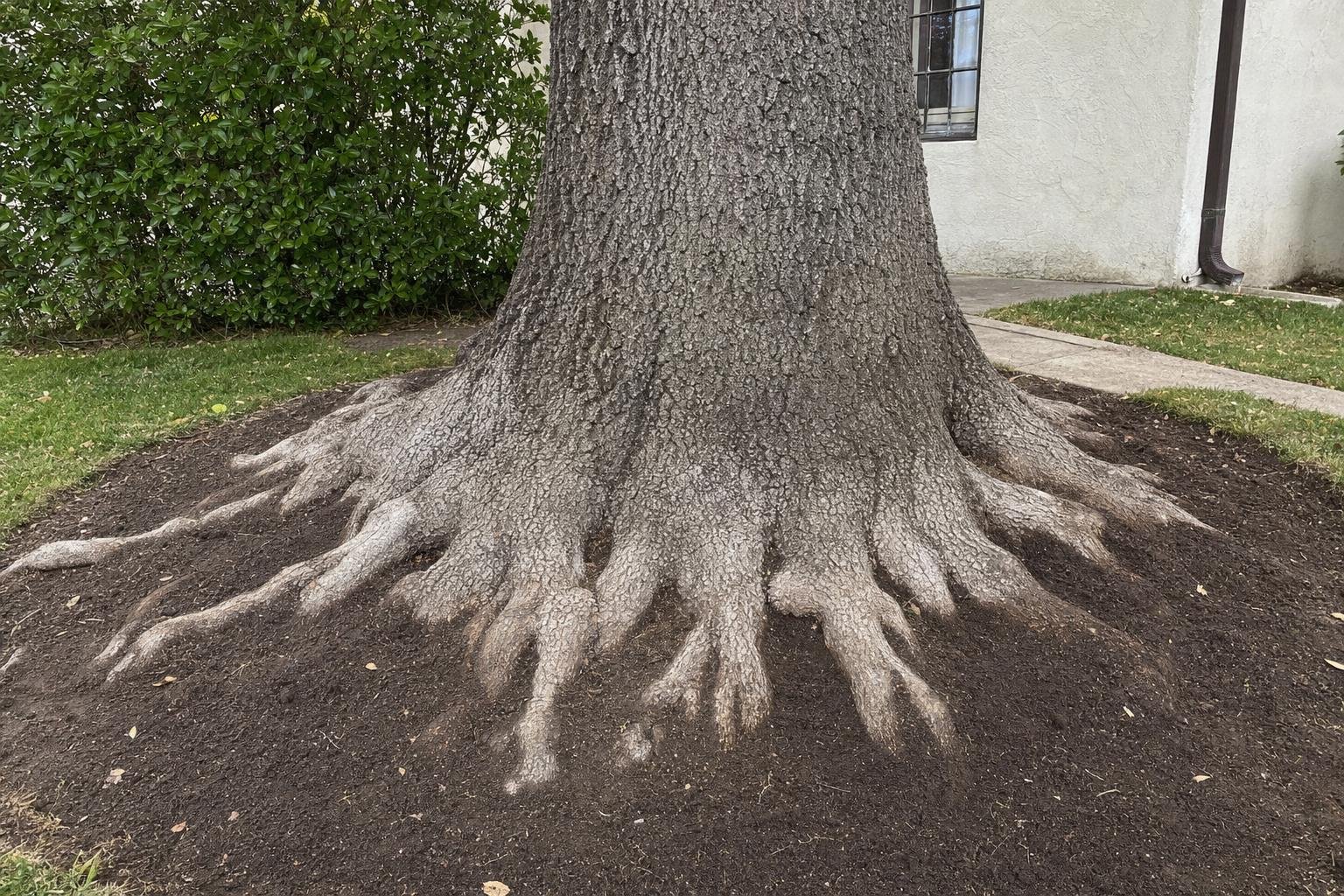
We dig by hand, with hand digging tools, around the base of the trunk until the upper root system is open at the soil surface. We're looking for the highest main lateral roots. Hand work is slower than a machine, but it keeps us from tearing up the roots we're trying to save.
Once the roots are exposed, we check which ones are circling or pressing on the trunk. Where a root is a girdling risk, we remove it with hand pruners. We only take the roots that need to go, and the rest stay.
What it costs
Root collar excavation runs $600 to $1,450 per tree. The work is priced per tree, so a yard with several trees gets a figure for each.
Most of Visalia's mapped soils, including Nord fine sandy loam, Grangeville sandy loam and Tagus loam, have low shrink-swell potential. Pockets on the western and northwest edges swell and shrink more with the wet and dry seasons, and that movement can damage underground utilities. Because we dig by hand, we can work close to buried lines without a machine in the way.
Other Services We Offer
Fast Scheduling
A few minutes on the phone covers most of it, no hard sell.